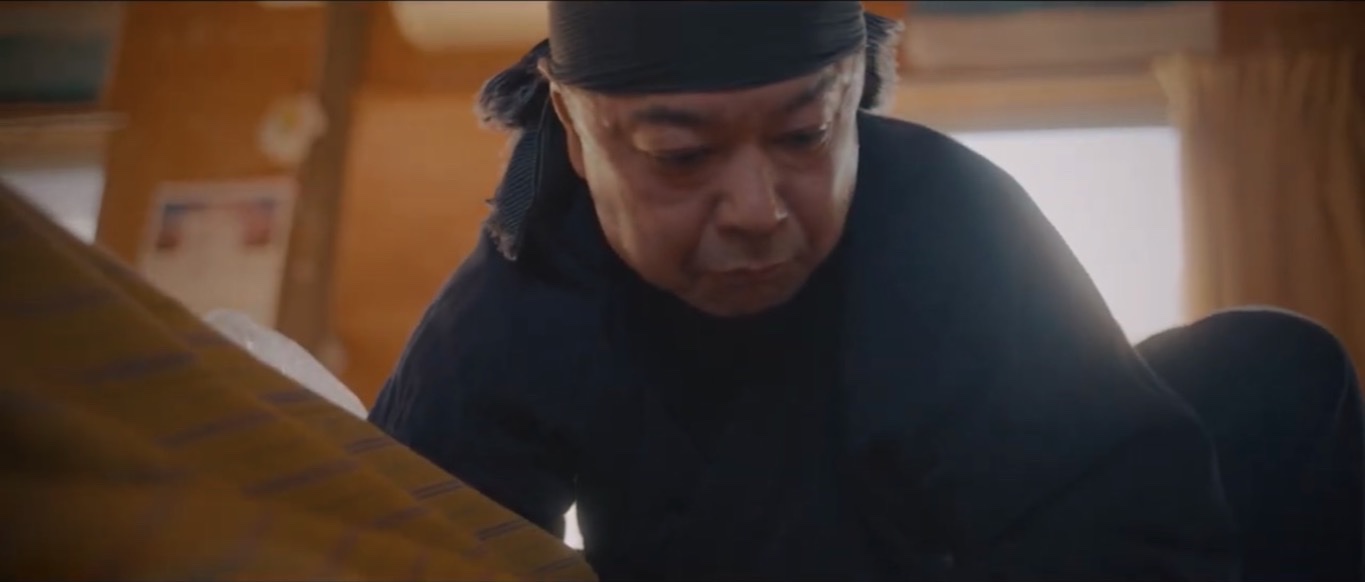
A futon is used in the hours when its maker is absent. Koichiro Shingai works by imagining the person who will lie down on it.
Inside the workshop, cotton is opened, judged, layered and shaped. The movements are practical, but the measure behind them is human. Shingai is not making an anonymous object to a fixed specification. He is preparing a place where someone will spend seven or eight hours of every day.
That length of contact changes the meaning of the work. Firmness, warmth and resilience are not abstract qualities. They affect how a body settles at night and how a person rises the next morning. The craft begins with material, but it reaches toward a life beyond the workshop.
Not a futon. The person beyond it.
Ask Shingai what he is making and he turns attention away from the finished product. What he says he wants to make is the smile on the other side of it: the expression of someone who has slept comfortably, softly and warmly.
This is a quiet reversal. Craft is often described through the maker's skill, the age of a technique or the beauty of an object. Here, the true result cannot be seen at the moment of completion. It appears later, in a room elsewhere, when the futon receives the weight and rhythm of a particular body.
The seriousness visible in Shingai's face is therefore not severity for its own sake. It is concentration directed toward somebody he may not yet have met. Each adjustment to the cotton is a small act of anticipation.
Koichiro Shingai at work, shaping the unseen hours of another person's day.
“I want to see the smile of the person who sleeps on it. I make each one as if I were raising a child.”
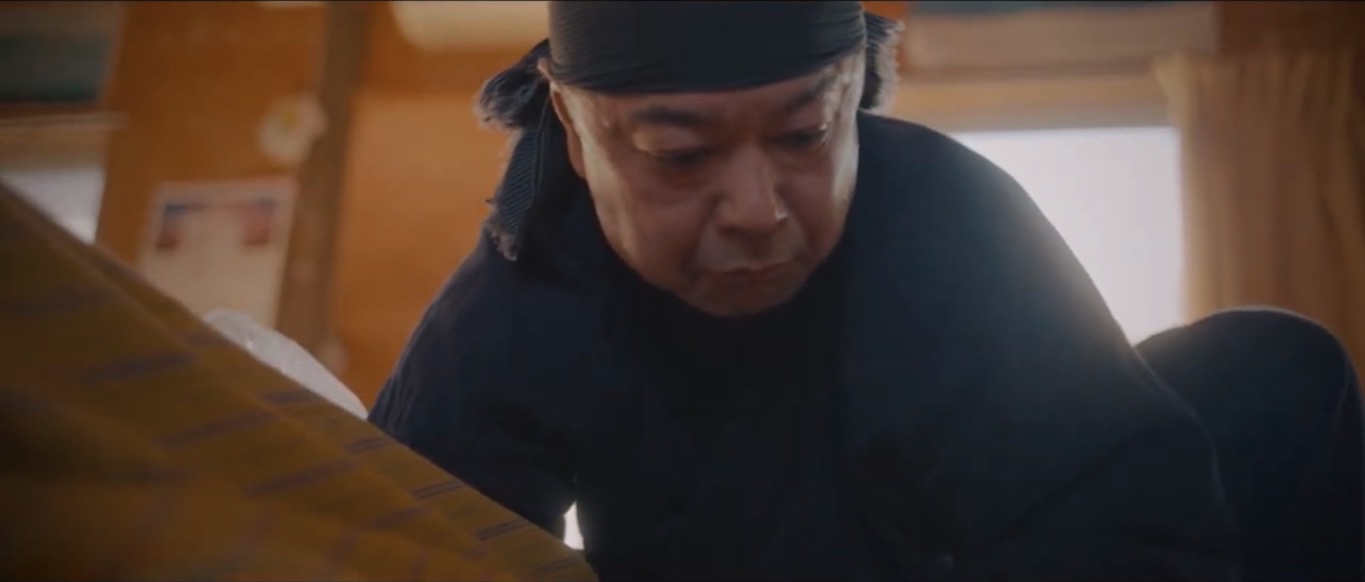
Koichiro Shingai at work, shaping the unseen hours of another person's day.
One piece at a time
Shingai compares making each futon to raising a child. It is a surprisingly tender image for a process that requires strength, control and repeated physical work. Yet it describes the responsibility precisely: each piece leaves his hands, enters the world and begins to support a life of its own.
He imagines the futons going out and doing their work well. He imagines the people who receive them feeling joy. The workshop is connected to those future rooms through that act of imagination, long before delivery takes place.
Handwork matters here because it keeps judgment close. Cotton does not arrive as a perfectly uniform substance, and bodies are not uniform either. The maker reads the material through touch, responds to small differences and builds comfort layer by layer.
At Seisei-an momen, the craft leaves the workshop and becomes part of the stay.
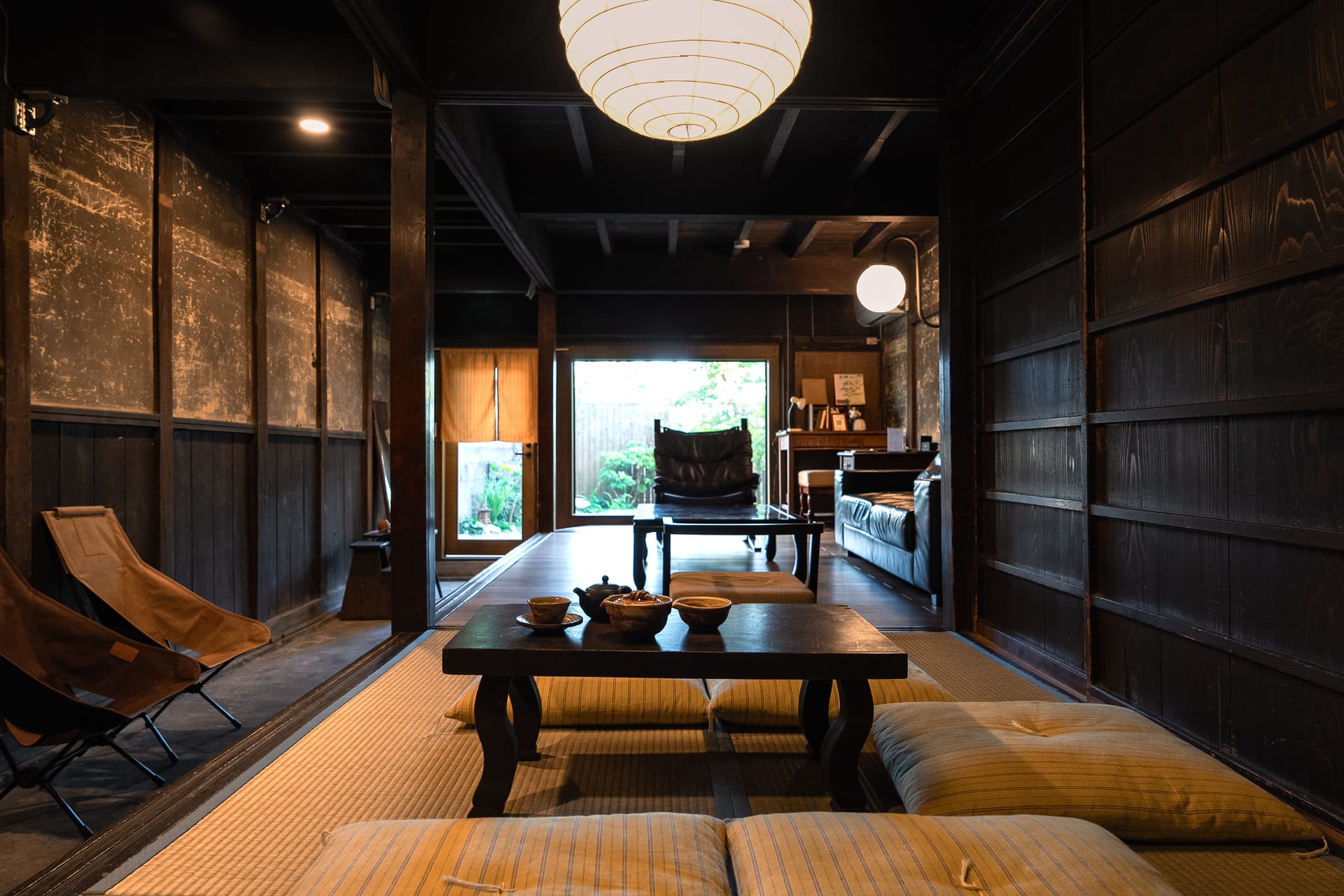
At Seisei-an momen, the craft leaves the workshop and becomes part of the stay.
A room where the craft can be felt
At Seisei-an momen in Okitsu, the encounter with this work is deliberately ordinary. Guests do not view the futon behind glass or meet it as a display of technique. They sleep on it.
That directness suits Shingai's way of speaking. The value of the futon is revealed through use: in how it holds warmth, how it responds to the body and how little one needs to think about it once the lights are out.
Along the old Tokaido, houses have always been places where travellers recover before continuing. Bringing the work of a living futon maker into one of those houses gives that old function a contemporary form. The road is not preserved by freezing it. It continues when present-day hands make it possible to rest there again.
The morning after
His day closes not with a grand statement, but with delivery. The futon moves from the maker's space toward the person for whom it was made. Greetings are exchanged. Thanks are given. The long attention of the workshop becomes part of an everyday room.
Perhaps that is the most exact definition of this craft: work that succeeds by disappearing into someone's rest. What remains visible is the morning, and the face of the person who slept well.