A shared practice can make people feel close before they know much else about one another.
Kendo begins with forms that can look severe from the outside: armour, a bamboo sword, a direct voice, repeated movement. Yet the life around those forms is built on something quieter. People return to the same floor, bow to one another, notice each other's progress and accept the responsibility of practising together.
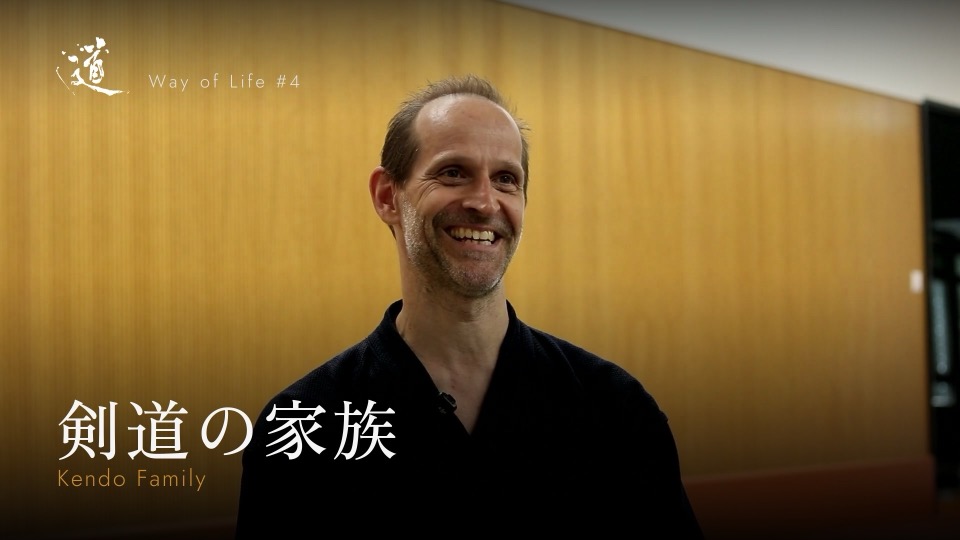
In Kendo Family, Godi Renz reflects on the relationships that gather around this repetition. The film is not a technical explanation of the martial art. It is a portrait of belonging, and of how a discipline carried by individuals can become a place shared by many.
A family built through practice
The word “family” in the title does not describe blood relations. It points to a closeness that forms when people agree to meet each other seriously. In a dojo, age, nationality and profession do not disappear, but they become less important than the work directly in front of everyone.
Renz's story gives this idea a human scale. Training partners learn the sound of one another's movement. A teacher can recognise hesitation before a student has found words for it. Someone who has practised for decades still begins again with the same bow as the person entering for the first time.
That continuity is what makes the community feel larger than any single session. A person may arrive because of curiosity or competition, but staying requires trust. You strike and are struck. You make mistakes in full view of others. You allow correction to become part of the relationship.
Godi Renz in the Way of Life film Kendo Family.
The practice belongs to no one person. It continues because people keep meeting on the same floor.
The threshold of the dojo
Every practice has a threshold. In kendo it is literal: the moment before stepping onto the floor. Shoes are left behind. The room is acknowledged. The people already inside are greeted. These actions are not decoration around the “real” training; they establish the attention that training needs.
For a visitor, this changes the experience immediately. The dojo is not a stage prepared for spectators. It is a working place with habits, responsibilities and a history carried through the people using it. Entering well means learning how to take part without treating those relationships as scenery.
This is also why repetition matters. Footwork that appears simple is practised until the body stops negotiating with every movement. Holding the shinai reveals unnecessary tension. The voice brings intention out into the room. Each return to the basics makes small differences visible.
Movement is explained before it is repeated.
Learning to be corrected
Progress in kendo is rarely a straight line. A movement may feel stronger while becoming less precise. Speed can hide uncertainty. The wish to succeed can make the body rigid. Practice places these contradictions in front of the student again and again.
Correction therefore becomes a form of care. A teacher asks for more because they are paying attention. A partner presents the same opening until the learner begins to see it. The lesson is not only how to perform a technique, but how to remain present when an assumption is taken away.
Renz's reflections suggest that these exchanges travel beyond the dojo. The habit of listening, adjusting and trying again becomes part of everyday life. Kendo is not valuable because every practitioner becomes the same. Its structure gives very different people a language through which they can meet.
A home that can travel
A dojo is rooted in a particular place, yet the relationships formed through kendo can cross borders. The etiquette and basic vocabulary create recognition between people who may not share a first language. They can begin with practice and allow conversation to follow.
This sense of a portable home is central to Kendo Family. Belonging is not presented as instant or effortless. It grows from returning, helping, being corrected and eventually taking responsibility for someone else's practice as well as one's own.
Seen this way, the family is always being remade. New students enter. Teachers age. People move away and visit again. What holds the group together is not nostalgia for a fixed past, but a living agreement to continue.
Local practice continues through teachers, partners and those entering the dojo for the first time.
Meeting the practice in Shizuoka
KAIDO's kendo experience begins from the same understanding: the visitor is not being handed a costume or placed in front of a staged performance. The first task is to enter respectfully, learn the rhythm of the room and meet the people who keep it active.
The private session introduces etiquette, stance, footwork, voice and the handling of shinai. Where timing allows, it also includes the chance to observe local practice and ask how kendo fits into the lives of those gathered there.
The goal is not mastery in an afternoon. It is to leave with a more exact sense of what the discipline asks, and why people continue to answer that request together.